The landscape of higher education is undergoing a massive shift. Gone are the days when a simple literature review and a few qualitative interviews were enough to secure a top grade in the social sciences or business streams. In 2026, the academic world is obsessed with data. Whether you are studying in London, Sydney, or Toronto, the ability to transform raw numbers into meaningful narratives is the new gold standard. However, this shift has brought a significant hurdle to the forefront of the student experience: the steep learning curve of statistical software.
Navigating these requirements is particularly challenging for international students who are often balancing local curriculum demands with global research standards. For instance, those pursuing degrees in North America often find that the expectations for empirical rigor are incredibly high. Many students find that seeking professional assignment help canada is a practical way to bridge the gap between their current knowledge and the sophisticated formatting and analytical standards required by Canadian institutions. This type of support allows students to focus on their core subject matter while ensuring their submissions meet the technical benchmarks set by their professors.
The Rise of Quantitative Analysis
Quantitative research has become the backbone of modern academia. Universities are no longer just looking for what happened; they want to know the “why” and the “how much” through statistical significance. This transition is driven by the professional world’s demand for data-literate graduates. From healthcare trends to consumer behavior, data dictates strategy. Consequently, students are being pushed toward complex modeling earlier in their academic careers, often before they have fully grasped the underlying mathematical concepts.
Why SPSS Remains the Academic Standard
Despite the rise of programming languages like Python or R, SPSS (Statistical Package for the Social Sciences) remains the most widely used tool in university classrooms. Its point-and-click interface makes it more accessible than coding-based platforms, yet its power is immense. It allows for everything from basic descriptive statistics to complex multivariate regressions and factor analyses.
However, “accessible” does not mean “easy.” The challenge for most undergraduates isn’t just clicking the right buttons; it’s understanding which test to run and how to interpret the “output” files that SPSS generates.
Common SPSS Modeling Challenges
Understanding the hurdles is the first step toward overcoming them. Most students encounter “red flags” in their data long before they reach the final draft of their paper.
| Challenge | Impact on Research | Solution |
| Data Cleaning | Missing values or outliers can skew results. | Use “Frequency” checks to identify anomalies early. |
| Assumpion Testing | Running tests on non-normal data leads to errors. | Perform Shapiro-Wilk or Kolmogorov-Smirnov tests. |
| Multicollinearity | Highly correlated variables ruin regression models. | Check VIF (Variance Inflation Factor) values. |
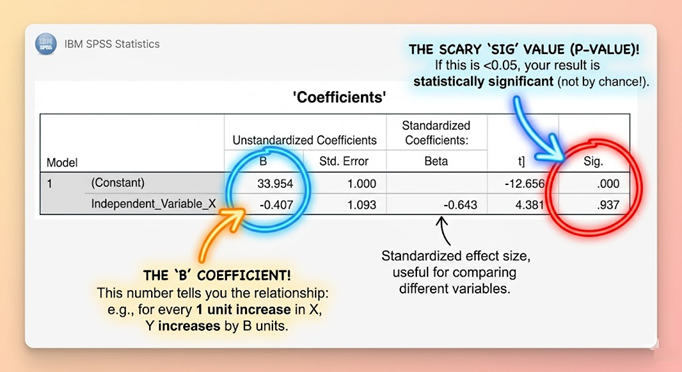
| Interpretation | Misunderstanding $p$-values or R-squared. | Focus on effect size, not just significance. |
Navigating the Technical Core
As you move into the middle of your research project, the technical pressure intensifies. It’s one thing to calculate a mean or a median, but it’s an entirely different beast to perform a Three-Way ANOVA or a Linear Regression with multiple moderators. This is usually the point where a student’s “dwell time” on a single assignment stretches from hours into weeks.
When the complexity of a project exceeds a student’s current software proficiency, it can lead to immense academic stress. This is precisely why many choose to consult with experts at MyAssignmentHelp to get specialized spss assignment help. By collaborating with professionals who understand the nuances of the software, students can see firsthand how to structure a syntax file, run complex models, and—most importantly—translate those daunting tables into a cohesive written argument. This hands-on learning approach helps demystify the software, making future projects feel far less intimidating.
The “Information Gain” Strategy for Students
To rank well in your class (and to ensure your paper is actually helpful to your field), you need to provide Information Gain. This means your paper shouldn’t just repeat what is in the textbook. You should:
- Use Real-World Data: Avoid using the generic datasets provided in class. Find public data from sources like the World Bank or Statista.
- Acknowledge Limitations: A “perfect” model is often a sign of manipulated data. Discussing your outliers shows expertise and honesty.
- Visual Clarity: Don’t just copy-paste SPSS tables. Recreate them in a clean, readable format that highlights the most important figures.
The Importance of Ethical Data Handling
In the age of AI and automated tools, the “Trustworthiness” (the T in H.E.E.A.T) of your data is paramount. Professors are now using sophisticated tools to check for data fabrication. Always keep your “Syntax” files in SPSS. These files act as a digital paper trail, proving exactly how you got from your raw data to your final conclusions. If a reviewer or professor asks how you handled a specific variable, your syntax file is your best defense.
How to Improve Your Technical Writing
Writing about statistics is a skill in itself. The goal is to be “readable” for an undergraduate level while maintaining “authoritative” depth.
- Avoid Jargon Overload: Instead of saying “The heteroscedasticity was significant,” explain that “the variance in the data was not constant, which required a robust standard error adjustment.”
- Tell a Story: Statistics are just characters in a story about human behavior or business trends. Use your writing to connect the numbers back to the real world.
- Active Voice: Instead of writing “The data was analyzed by the researcher,” write “We analyzed the data using a linear regression model.”
The Roadmap to 2026 Success
As we look toward the future of education, the integration of human intuition and software power will only grow. Students who master these tools now will be the leaders of tomorrow’s data-driven economy. Whether you are navigating the specific rubrics of a university in Vancouver or tackling a complex social survey in Manchester, the principles of clear, honest, and technically sound research remain the same.
By utilizing resources wisely—whether that means attending extra lab hours, forming study groups, or seeking targeted help when the technical barriers become too high—you ensure that your academic journey is defined by growth rather than frustration.
Frequently Asked Questions (FAQ)
1. Is SPSS better than Excel for university assignments?
Ans: Yes. While Excel is great for basic calculations, SPSS is specifically designed for social science research. It handles complex variables, hypothesis testing, and large datasets much more reliably than Excel.
2. What is a “p-value” and why does it matter?
Ans: The $p$-value tells you the probability that your results happened by chance. In most academic fields, a $p$-value of less than 0.05 is considered “statistically significant,” meaning there is a less than 5% chance the result is a fluke.
3. How do I avoid “spammy” patterns in my research paper?
Ans: Avoid “keyword stuffing” your paper with statistical terms just to sound smart. Focus on clarity. If a sentence doesn’t add value to the reader’s understanding, remove it. Use the H.E.E.A.T framework: be helpful, share your experience, show expertise, be authoritative, and stay trustworthy.
4. Can I use AI to run my SPSS analysis?
Ans: AI can help explain concepts or write code, but it often “hallucinates” statistical results. It is always safer to run the analysis yourself in the software to ensure the output is based on your actual data.
5. Why is my SPSS output showing “empty” cells?
Ans: This usually happens due to missing data in your original spreadsheet. Before running a model, ensure you have “cleaned” your data and decided how to handle missing values (either by excluding those cases or using mean imputation).
About The Author
Hi, I’m Harrison Walker. I am a Senior Academic Consultant and Research Strategist with over a decade of experience helping students navigate the complexities of higher education. My work focuses on bridging the gap between theoretical classroom learning and the technical demands of modern research, specifically in the realms of data science and quantitative analysis.