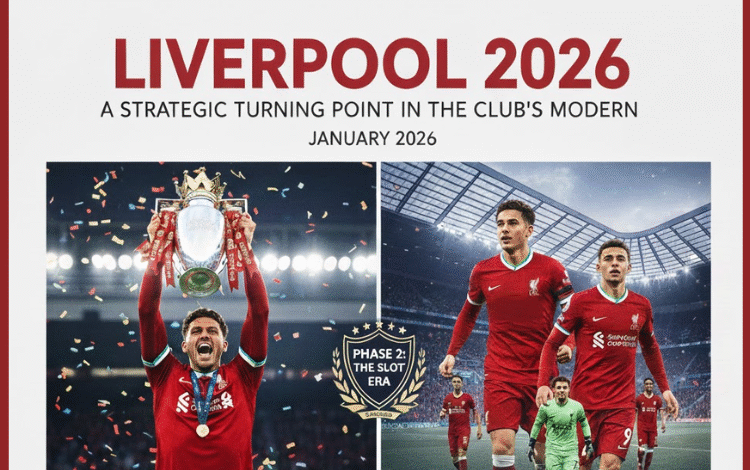
The idea of liverpool 2026 represents a defining chapter in Liverpool Football Club’s long-term evolution rather than a single season measured purely by results. It reflects a period in which the club is reshaping its competitive identity to meet the demands of modern football while preserving its core values. As elite football becomes increasingly complex, Liverpool’s focus has shifted toward sustainability, tactical intelligence, and long-range planning. This phase marks a move away from reliance on past success and toward a future-oriented structure. Decisions made during this period are designed to influence performance well beyond one campaign. Liverpool is therefore best understood as a blueprint for continuity and controlled ambition.
What Is Liverpool 2026?
Defining the Concept and Its Importance
At its core, liverpool 2026 refers to Liverpool’s projected sporting, tactical, and organizational position as the club moves through the middle of the decade. The term does not simply describe a season or league campaign but instead captures a broader vision for how the club intends to operate at the highest level. It encompasses squad planning, recruitment philosophy, leadership evolution, and playing style adaptation. This concept highlights Liverpool’s effort to remain competitive while managing physical, financial, and tactical demands. Rather than reacting to short-term outcomes, the club is shaping a sustainable future. In essence, it defines direction rather than destination.
Long-Term Vision and Strategic Foundations
Sustainability as a Competitive Advantage
The vision behind liverpool 2026 is rooted in sustainable excellence rather than immediate dominance. Liverpool’s leadership has increasingly emphasized squad balance and long-term value over short-lived impact. Recruitment decisions are guided by tactical suitability, durability, and growth potential rather than reputation alone. Behind the scenes, analytics and performance data influence nearly every footballing choice. This structured approach minimizes risk while maintaining elite standards. The objective is to build a team capable of competing consistently across multiple seasons and competitions.
Ownership Model and Football Governance
Stability Driving Performance
Governance plays a critical role in shaping Liverpool’s future direction. Investment priorities have shifted toward infrastructure, training environments, and football intelligence systems rather than purely transfer expenditure. This approach strengthens the club’s foundation and protects it from market volatility. Clear alignment between ownership, executives, and coaching staff allows for calm and consistent decision-making. Reactionary changes are avoided in favor of long-term planning. Stability at executive level directly supports on-pitch consistency.
Squad Identity and Leadership Structure
Balancing Experience With Renewal
The squad structure entering this era is defined by balance rather than dependency on one generation of players. Experienced figures provide leadership, tactical understanding, and professionalism, while younger players are introduced gradually to preserve continuity. Leadership responsibility is shared across the pitch, creating resilience during difficult periods. Dressing-room culture remains disciplined and competitive. This balance allows natural evolution without disruption. Adaptability and collective responsibility define the squad’s identity.
Youth Development and Academy Pathway
Building From Within
Youth development remains central to Liverpool’s long-term planning. Academy players progress through carefully structured pathways that prioritize confidence, physical readiness, and tactical intelligence. First-team exposure is earned gradually rather than rushed, protecting long-term growth. Coaching staff place strong emphasis on mental resilience alongside technical quality. This approach reduces reliance on external recruitment while preserving club identity. The academy continues to influence the future shape of the squad.
Tactical Evolution and Playing Philosophy
Adaptability in a Changing Game
Tactical flexibility has become a defining feature of Liverpool’s modern identity. Instead of relying on a single fixed system, formations and pressing intensity are adjusted according to opposition and competition demands. Midfield roles are increasingly fluid, allowing smoother transitions between defensive and attacking phases. This adaptability improves control during high-pressure matches. Tactical discipline now complements intensity and aggression. The playing style reflects maturity and strategic awareness.
Defensive Structure and Attacking Efficiency
Control Without Losing Identity
As the team evolves, defensive organization has become more compact and disciplined. Positional awareness and spacing reduce vulnerability to counterattacks and transitional moments. Attacking play focuses on efficiency, timing, and intelligent movement rather than constant risk-taking. Players are encouraged to contribute creatively while maintaining structure. This balance supports consistency across long campaigns. Control and precision define the modern approach.
Domestic Performance and League Objectives
Consistency Over Short-Term Peaks
In liverpool 2026, domestic success is measured by sustained performance rather than brief surges of form. Maintaining high standards across an entire league season is essential for European qualification and financial stability. Squad rotation and workload management are carefully planned to handle congested schedules. The emphasis is on reliability rather than emotional momentum. League consistency reflects strategic planning. Stability remains the foundation of domestic ambition.
European Ambitions and Global Identity
Competing at the Highest Level
European competition continues to shape Liverpool’s global reputation. The club views continental tournaments as a benchmark of long-term progress rather than short-term validation. Tactical adaptability and squad depth are essential when facing elite opposition. Experience gained across multiple campaigns strengthens resilience and composure. Progress in Europe reflects sustainable growth. Continental ambition remains embedded in the club’s culture.
Visual and Contextual Representation
Imagery Supporting the Narrative
An image of Anfield under floodlights would visually represent the atmosphere surrounding this era, with alt text describing the stadium environment during the 2026 phase. A training-ground image showing players engaged in tactical preparation would highlight evolution and planning, with alt text referencing modern tactical development. An academy image from the Kirkby training complex would emphasize youth integration, with alt text describing young players shaping the club’s future.
(FAQs)
What is Liverpool 2026?
Liverpool 2026 is the club’s long-term vision for squad evolution, tactical growth, and sustained competitiveness. It’s about planning for the future, not just one season.
Is Liverpool rebuilding or transitioning?
It’s a transition. Experienced leaders stay while youth is integrated smartly. Continuity matters, disruption doesn’t.
Why is youth development important?
Youth is central. Academy players are carefully nurtured and gradually exposed to first-team football to preserve club identity.
Will the playing style change?
The style evolves, not revolutions. Flexibility, tactical discipline, and controlled pressing define the team.
What about Europe?
Europe stays a priority. Squad depth and adaptability ensure Liverpool compete consistently on the continental stage.
Why should fans care?
It’s about stability and ambition. Liverpool 2026 shows intelligent planning that protects identity and keeps the club competitive.
Are trophies still a goal?
Absolutely. Sustainability supports silverware. Winning now and winning consistently are both targets.
Conclusion
The importance of liverpool 2026 lies in its role as a foundation for future success rather than a single endpoint. It represents a club prioritizing intelligence, planning, and sustainability over reactionary decisions. Squad evolution, tactical maturity, and youth development define this phase. Liverpool’s identity continues to adapt without losing competitiveness. For supporters, this era symbolizes progress built with purpose. The future is being shaped deliberately and responsibly.