Computer-Generated Imagery (CGI): Transforming Visual Communication and Digital Innovation

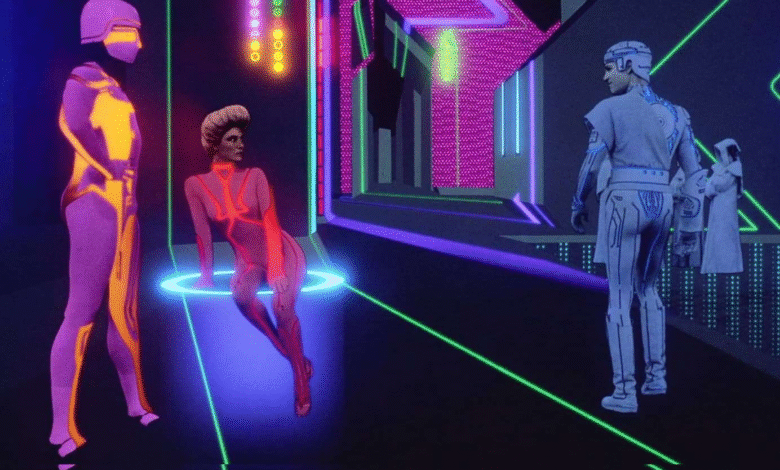
Computer-Generated Imagery (CGI) has become a foundational technology in modern visual communication, enabling organizations to create immersive, precise, and scalable digital content. From cinematic productions and architectural visualization to product development and advertising, CGI plays a strategic role in shaping how businesses present ideas, products, and experiences in a digitally driven world.
Executive Overview
CGI refers to the creation of visual content using computer software. It encompasses 2D and 3D graphics, animation, simulation, and visual effects generated through advanced rendering technologies. Over the past two decades, CGI has evolved from a specialized entertainment tool into a core business capability across industries including media, automotive, real estate, healthcare, aerospace, and consumer goods.
Today, CGI is not only about visual enhancement—it is a strategic asset that supports innovation, reduces production costs, accelerates time to market, and enhances customer engagement.
Technological Foundations
Modern CGI is built upon advanced modeling, rendering, and animation systems. High-performance computing, real-time rendering engines, and artificial intelligence have significantly expanded its capabilities. Key components include:
- 3D Modeling: The creation of digital representations of objects, environments, and characters.
- Texturing and Shading: Applying realistic surface details and materials to digital models.
- Lighting and Rendering: Simulating real-world lighting conditions to produce photorealistic results.
- Simulation: Replicating physics-based phenomena such as fluid dynamics, particle systems, and structural behavior.
- Animation: Bringing digital assets to life through movement and interaction.
Cloud computing and GPU acceleration have further enhanced CGI workflows, enabling large-scale productions and real-time visualization with unprecedented efficiency.
Strategic Business Applications
Media and Entertainment
In film, television, and gaming, CGI enables the creation of environments and visual effects that would be impractical or impossible to capture physically. It enhances storytelling by expanding creative boundaries while maintaining high production quality.
Product Visualization and Marketing
For manufacturers and consumer brands, CGI allows the development of photorealistic product imagery before physical prototypes are available. This capability accelerates marketing campaigns, supports e-commerce platforms, and reduces dependency on traditional photography.
Architecture and Real Estate
Architectural visualization leverages CGI to create detailed representations of buildings and environments prior to construction. These visualizations support investor presentations, regulatory approvals, and client engagement.
Engineering and Simulation
In aerospace, automotive, and industrial sectors, CGI-based simulations assist in testing performance, safety, and aerodynamics. Digital twins and virtual prototyping reduce development risks and optimize design processes.
Operational Advantages
Organizations adopting CGI technologies benefit from several strategic advantages:
- Cost Efficiency: Reduced need for physical prototypes, sets, and repeated photography.
- Scalability: Digital assets can be reused and adapted across campaigns and markets.
- Speed to Market: Faster content production cycles and real-time revisions.
- Creative Flexibility: Ability to visualize concepts without physical limitations.
- Sustainability: Reduced material waste and logistical requirements.
These benefits position CGI as both a creative and operational driver of digital transformation.
Emerging Trends
The integration of CGI with artificial intelligence, virtual reality (VR), augmented reality (AR), and real-time rendering engines is redefining immersive experiences. Real-time 3D environments are increasingly used in virtual showrooms, interactive product demonstrations, and metaverse applications.
Additionally, advancements in photorealistic rendering and generative technologies are enabling hyper-real visual outputs that are nearly indistinguishable from real-world imagery.