The United Kingdom has set ambitious targets to phase out petrol and diesel cars by 2030, but many uk drivers delaying electric vehicle transitionremain hesitant to make the switch to electric vehicles. Although public awareness about climate change is rising and a wide variety of EV models are available, adoption rates are slower than anticipated. High upfront costs, concerns over battery performance, limited charging infrastructure, and uncertainty about government policies are key factors that discourage drivers from transitioning. Many motorists prefer to wait until they feel confident that electric vehicles can reliably meet their everyday driving needs. Understanding these challenges is crucial for developing strategies to accelerate EV adoption and support the UK’s environmental and transport modernization goals.
What are UK Drivers Delaying Electric Vehicle Transition?
The phrase UK drivers delaying electric vehicle transition refers to the trend where a significant portion of UK motorists postpone switching to electric vehicles, even though the technology, incentives, and environmental benefits are increasingly clear. This hesitation is not about opposition to EVs but is driven by practical concerns, financial constraints, and psychological factors. Many drivers perceive EVs as expensive, with doubts about long-term reliability and battery performance, while range anxiety and limited access to charging infrastructure add to the uncertainty. Essentially, this term highlights the gap between potential EV adoption and actual uptake, explaining why many drivers continue to postpone the transition. The delay reflects the broader challenge of changing deeply ingrained driving habits, including refueling routines, maintenance expectations, and travel planning.
Understanding the Delay
Transitioning from petrol or diesel vehicles to electric requires adjustments that go beyond simply buying a new car. Drivers must adapt to different refueling patterns, plan routes around charging points, and consider battery maintenance and performance over time. Until drivers are confident that EVs can provide the same convenience and affordability as traditional vehicles, hesitation is natural. This cautious approach explains the slower adoption rate despite the increasing number of EV models and supportive policies, emphasizing the importance of education and awareness campaigns to reassure potential buyers.
Financial Challenges Are Slowing Adoption
High Purchase Costs
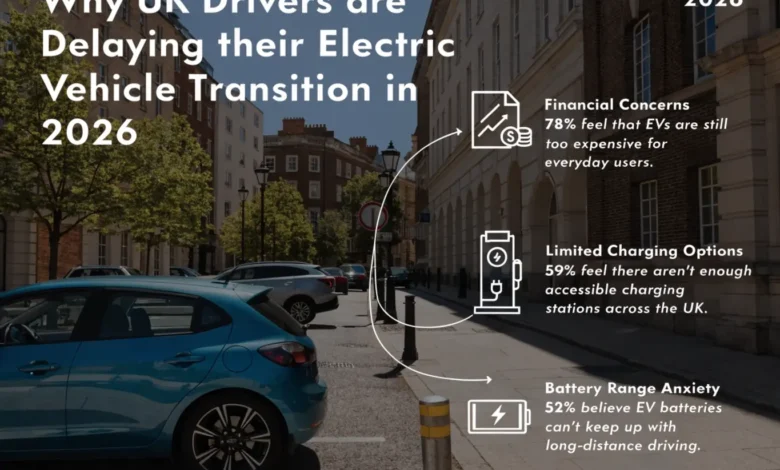
Financial barriers are one of the primary reasons why UK drivers are hesitant to adopt electric vehicles. While EVs generally have lower operating costs compared to petrol or diesel vehicles, the upfront purchase price is significantly higher, especially for mid-range models. Many households are unable to justify this investment, and higher insurance premiums for EVs due to battery replacement concerns further exacerbate the issue. Concerns about depreciation also discourage potential buyers from making the switch. These financial challenges are central to why many drivers remain cautious and choose to delay purchasing an electric vehicle, even when long-term savings are apparent.
Limited Impact of Incentives
Although government grants and subsidies provide financial relief, they do not fully resolve affordability concerns for all buyers. Some incentives focus exclusively on new vehicles, leaving prospective buyers of used EVs with fewer benefits. Rural drivers who cover longer distances may also find these incentives less applicable to their lifestyle. The combination of high upfront costs, insurance concerns, and limited financial support means that many drivers continue to postpone their transition to electric vehicles until more affordable options and comprehensive incentives are available.
Charging Infrastructure and Accessibility
Availability of Charging Points
The adequacy of charging infrastructure is a critical factor influencing adoption. Many drivers hesitate to switch because public charging points are perceived as insufficient, particularly in rural areas. Residents without private parking face additional challenges, as they cannot install home chargers and must rely on public stations that may be busy, slow, or malfunctioning. This lack of reliable access creates anxiety for potential EV owners and contributes to the ongoing delay in widespread adoption.
Charging Time Concerns
Charging duration is another practical barrier. Standard chargers may require several hours to fully recharge a vehicle, which is inconvenient for long trips or spontaneous travel. While ultra-rapid chargers are becoming more common, they are still limited in number and unevenly distributed across the UK. These infrastructural challenges, combined with drivers’ concerns about availability and convenience, play a major role in why many motorists are postponing the switch to electric vehicles until they feel confident that charging will not disrupt their daily routines.
Range Anxiety and Psychological Barriers
Understanding Range Anxiety
Range anxiety remains a key psychological barrier to adoption. Many drivers worry that EVs will not have sufficient battery capacity for long journeys or even daily commutes without frequent charging. Misunderstandings about battery performance, longevity, and reliability in different weather conditions amplify these fears. Despite modern EVs often being capable of traveling 200–300 miles on a single charge, unfamiliarity leads drivers to overestimate the risks.
Lack of Knowledge and Experience
Limited exposure to EVs further contributes to hesitation. Many drivers feel uncertain about maintenance, battery replacement, and long-term reliability. Test drives and practical experience are still limited, which prevents motorists from fully appreciating the convenience and cost benefits of EVs. Until more drivers have firsthand experience and understand the real-world performance of electric vehicles, psychological barriers such as range anxiety will continue to slow adoption.
Policy Uncertainty and Market Signals
Government Incentives and Regulations
Government policies influence the pace of EV adoption, and uncertainty can create caution among motorists. While grants and tax incentives encourage some drivers, potential changes to regulations or taxes may cause hesitation. Many prospective buyers prefer to wait until incentives and policies are stable before committing to a purchase, slowing the overall transition.
The Role of Hybrid Vehicles
Hybrid vehicles offer an intermediate solution, allowing drivers to reduce emissions while retaining the familiarity of petrol engines. Although hybrids support environmental goals, they can also slow the adoption of fully electric vehicles. Many drivers postpone full EV adoption until they feel confident in the charging infrastructure, pricing, and long-term policy support.
Social and Accessibility Factors
Impact on Older Drivers and Urban Residents
Social and accessibility factors also influence adoption rates. Older drivers may be slower to embrace EVs due to familiarity with conventional engines and limited knowledge of EV technology. Urban residents living in apartments or flats without private charging options face practical difficulties, making it harder to transition to electric vehicles.
Challenges for Rural Drivers and Disabled Motorists
Rural drivers often travel longer distances to access charging stations, creating additional challenges. Drivers with disabilities may also face barriers to accessing both home and public charging facilities. These social and accessibility challenges, combined with financial and psychological concerns, explain why adoption is slower than anticipated, and why many drivers continue to delay the transition to electric vehicles.
Positive Trends and Future Prospects
Growing Adoption Rates
Despite challenges, EV adoption in the UK is steadily increasing. Registrations are rising year on year, and electric vehicles now represent a growing share of new car sales. Surveys indicate that most drivers plan to consider an EV within the next few years, suggesting that delays are often temporary.
Improving Infrastructure and Technology
Battery technology is improving, charging networks are expanding, and vehicle prices are gradually decreasing. Exposure to EVs through test drives, rental programs, and public awareness campaigns helps drivers understand that range limitations are often overestimated. As infrastructure, experience, and confidence improve, more drivers are expected to transition, accelerating the shift toward sustainable mobility and supporting the UK’s environmental objectives.
(FAQs)
1. Why are UK drivers delaying electric vehicle transition?
Many drivers are postponing EV adoption due to high costs, limited charging infrastructure, range anxiety, and policy uncertainty.
2. How expensive is it to buy an electric vehicle in the UK?
Electric vehicles often have higher upfront costs than petrol cars, though long-term running costs are lower.
3. What is range anxiety and how does it affect adoption?
Range anxiety is the fear of running out of battery mid-journey, which makes some drivers hesitant to switch to EVs.
4. Are there enough public charging points in the UK?
Charging infrastructure is expanding, but some areas, particularly rural regions, still lack sufficient fast-charging options.
5. Do government incentives encourage EV adoption
Yes, grants and tax incentives help, but they do not fully remove affordability concerns for all drivers.
6. How do hybrids affect EV adoption?
Hybrids act as a transitional option, reducing emissions while allowing drivers to postpone switching to fully electric vehicles.
7. When is EV adoption expected to accelerate in the UK?
As technology improves, infrastructure expands, and vehicle prices drop, more drivers are expected to transition within the next few years.
Conclusion
A combination of financial, infrastructural, psychological, social, and policy-related factors explains why many UK motorists continue to postpone adopting electric vehicles. High purchase costs, limited and inconsistent charging networks, range anxiety, and policy uncertainty all contribute to the cautious approach. Accessibility challenges and social factors further influence adoption, particularly for urban residents, older drivers, and rural motorists. Nevertheless, EV adoption is gradually increasing, and improvements in technology, infrastructure, and education are expected to accelerate the transition. Addressing these barriers effectively will encourage more UK drivers to embrace electric vehicles, supporting environmental targets and modernizing the nation’s transport system.