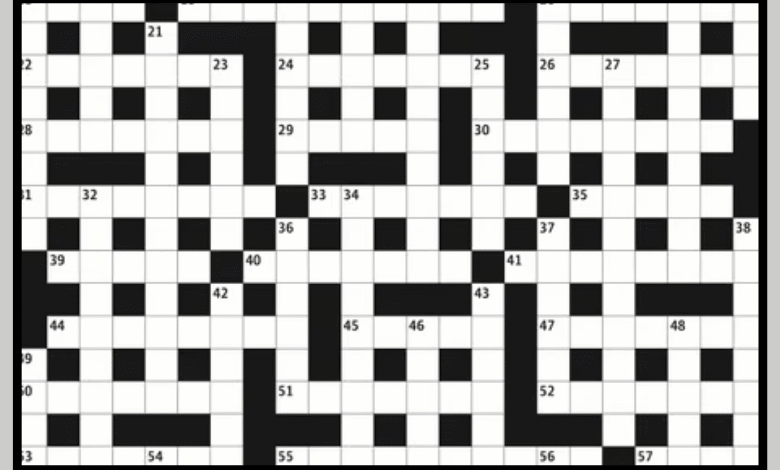
The Guardian Crossword is one of the most well-known and loved daily puzzles for those who love vocabulary, intriguing clues and a good brain workout. There are many types of crosswords to choose from: the Quick, the Mini, the Cryptic, the Weekend and the Prize Crosswords, so even if you are only starting out, you will be able to find a type that suits you. While some people need a quick crossword to solve when they have only a few free minutes in the morning, others like spending time deciphering cryptic clues. The Guardian Crossword Archive will give you a chance to go back to past puzzles and practice whenever you wish.
Guardian Crossword Today: Choosing the Right Daily Puzzle
When searching for the latest puzzle, it is important to remember that the Guardian publishes several different formats. The Quick Crossword is designed around more direct clues and is suitable for readers who want a straightforward vocabulary challenge. The Mini offers a shorter experience, making it useful when you only have a few minutes available. Cryptic puzzles require more interpretation because their clues normally combine a definition with some form of wordplay. Quick Cryptic and Quiptic formats can provide useful stepping stones for people who are still learning cryptic conventions. The best choice depends on whether you want speed, accessibility, practice or a more demanding test of language and reasoning.
A daily puzzle does not have to be completed from beginning to end to be worthwhile. If you solve several clues and then become stuck, leaving the grid for a while can often make the remaining clues easier later. Crossing letters provide valuable information because every confirmed answer reduces the number of possibilities elsewhere in the grid. This makes crossword solving different from a simple quiz, where each question is usually independent of the others. A single breakthrough can unlock several neighbouring answers and change your understanding of the entire puzzle. That interconnected design is one of the reasons regular solvers find daily crosswords so satisfying.
Guardian Quick Crossword Today and Mini Crossword
The Quick Crossword is a practical choice for anyone who enjoys word puzzles but does not necessarily want complicated cryptic construction. Its clues are generally more direct, so solvers can concentrate on vocabulary, definitions and general knowledge without decoding multiple layers of wordplay. The format can be particularly useful for beginners who are becoming comfortable with answer lengths and crossing letters. It can also work well for experienced solvers who want something that can be completed during a short break. According to the Guardian’s crossword information, the Quick appears on weekdays and Saturdays. That regular schedule makes it easy to turn the puzzle into a simple daily habit.
The Mini is another useful option for readers who prefer a compact challenge. Because the grid is smaller, it can be completed more quickly and may feel less intimidating to someone approaching crosswords for the first time. It is also useful as a warm-up before attempting a longer or more complicated puzzle. Short puzzles teach the same basic habits of checking definitions, considering possible answers and using crossing letters. The reduced size simply means that the experience requires less time and commitment. For busy readers, that can make the difference between solving regularly and abandoning the hobby altogether.
Guardian Crossword Sunday and Weekend Challenges
Weekend solving has a different rhythm from weekday solving because many people have more time to concentrate on a demanding puzzle. A Sunday or Weekend crossword can therefore become a relaxed activity rather than something squeezed into a short morning routine. Instead of worrying about completing the grid quickly, you can spend more time analysing difficult clues and considering alternative meanings. If an answer remains elusive, you can leave it and return later after solving other parts of the puzzle. The additional crossing letters may reveal information that was not available during your first attempt. This slower approach is particularly useful for anyone trying to improve their cryptic-solving ability.
Weekend puzzles can also make good shared activities. Two people may approach the same clue differently, with one noticing the definition while the other identifies the wordplay. Talking through possible answers can reveal connections that are difficult to see when working alone. It is also a useful way for beginners to learn without simply being given the solution. An experienced solver can explain why a particular word is an indicator or how the letters have been manipulated. The result is both a completed puzzle and a practical lesson in solving technique.
Guardian Crossword Prize, Cryptic and Advanced Puzzles
The Prize Crossword is intended for solvers who enjoy a more demanding challenge and are comfortable spending considerable time on individual clues. Advanced cryptic puzzles can involve unusual vocabulary, complicated constructions, misleading surface readings and definitions that use less familiar meanings. The difficulty does not necessarily come from one obscure fact; it can come from several ordinary ideas being combined in an unexpected way. This is why experienced solvers often spend significant time analysing a clue even when they have solved most of the grid. The final few answers can require a completely different approach from the clues that were solved quickly. For dedicated enthusiasts, that resistance is part of the enjoyment rather than a flaw.
The most effective way to approach a difficult puzzle is to separate the clue into its possible components. First, look for the definition, which is commonly positioned at one end of the clue. Then examine the remaining wording for anagram, reversal, deletion, containment, hidden-answer, homophone or charade indicators. Check the proposed answer against its length and all available crossing letters before deciding that it is correct. If one part of the clue cannot be explained, treat the answer as provisional rather than certain. This habit prevents attractive but incorrect synonyms from taking over the grid.
Guardian Crossword Search and Archive
The crossword search and archive are especially valuable for people who want more practice than the latest puzzle provides. An archive allows you to revisit older grids and solve them without the pressure of keeping up with a daily publishing schedule. This is particularly useful when learning a specific cryptic technique because you can practise recognising the same construction repeatedly. For example, after learning how hidden answers work, you can deliberately examine older puzzles for clues using that mechanism. Repeated exposure makes the indicators increasingly familiar and reduces the amount of time needed to identify the correct approach. The archive therefore works not only as a collection of old puzzles but also as a practical learning resource.
The Guardian’s crossword history stretches back many decades, giving regular solvers a substantial body of material to explore. Its crossword resources include different series, dates and puzzle types, so an archive search can be useful when looking for a particular challenge. Older puzzles can also help experienced solvers compare different clue-writing styles and levels of difficulty. For beginners, the archive removes the pressure of solving only the puzzle published today. You can choose an older grid that matches your current ability and work through it at your own pace. That freedom makes structured practice much easier to maintain.
How to Improve Your Crossword Solving Skills
Improving at crosswords is mainly about recognising patterns rather than trying to guess answers faster. At first, terms such as anagram indicators, containers and hidden answers may seem like a confusing collection of rules. With practice, however, these mechanisms become familiar and you begin to recognise them almost automatically. You also develop a personal vocabulary of common abbreviations, synonyms and unusual words that frequently appear in crossword puzzles. The more puzzles you solve, the less time you spend working out the basic structure of a clue. That leaves more attention available for the genuinely challenging parts.
A useful practice routine is simple and repeatable. Start by scanning the entire puzzle and identifying clues that appear approachable. Enter confident answers and use their crossing letters to investigate more difficult clues. When you are stuck, change direction instead of repeatedly making the same guess. If you eventually check the answer, study the explanation carefully and identify exactly how the clue was constructed. The objective is not merely to discover the missing word but to learn a technique that can help you solve a similar clue independently in the future.
For quick reference, keep these core habits in mind:
- Identify the likely definition at the beginning or end of a clue.
- Check the number of letters before accepting an answer.
- Look for familiar wordplay indicators.
- Use crossing letters to reduce possible answers.
- Do not accept a synonym unless the wordplay supports it.
- Leave difficult clues and return to them later.
- Study explanations when you need help so that you learn from the solution.
These habits work for both newcomers and experienced solvers. Beginners gain a reliable method for approaching unfamiliar clues, while advanced players can use the same principles to check answers that initially seem convincing. The important change is moving from guessing to testing. Instead of asking only what word might fit the definition, ask how the setter could have constructed that word. That question often reveals the route to the answer.
Is the Guardian Crossword Worth Solving?
For people who enjoy language, vocabulary and problem-solving, the Guardian’s crossword collection is certainly worth exploring. Its biggest strength is variety, because different formats allow readers to choose a challenge that suits their time and experience. A Mini can provide a short mental break, while a Quick offers a more substantial but direct puzzle. Cryptic formats provide greater depth for people who enjoy decoding wordplay, and Prize puzzles offer a tougher challenge for experienced enthusiasts. Weekend and Sunday options can turn solving into a slower leisure activity rather than a quick daily task. The archive then provides additional opportunities to practise whenever you want.
There are also practical learning benefits. Regular solving exposes you to synonyms, alternative meanings, unusual vocabulary and different ways of manipulating letters. It encourages close reading because small words can completely change the function of a clue. You also learn to test assumptions and revise your thinking when the evidence does not support your first answer. These are useful forms of mental engagement, although crosswords should be treated as enjoyable recreation rather than a guaranteed method of improving health or intelligence. The most reliable benefit is the combination of learning and entertainment. You are developing familiarity with language while doing something designed to be satisfying.
The experience is ultimately most valuable when you avoid unnecessary pressure. There is no need to complete every puzzle or compete with experienced solvers on speed. A difficult clue can take time, and checking an explanation does not make the activity pointless. If you understand why an answer works, you have gained knowledge that may help with another puzzle later. For that reason, progress should be measured by increasing understanding rather than simply by completion time. Anyone who enjoys the feeling of finally solving a clue that seemed impossible can find a long-lasting hobby in these puzzles.
Frequently Asked Questions
What is the Guardian crossword?
It is a collection of word puzzles with formats such as Quick, Mini, Cryptic, Weekend and Prize. Each format offers a different level of difficulty, so beginners and experienced solvers can find a suitable challenge.
Where can I find the crossword today?
The latest puzzles are available in the Guardian’s crossword section, with different formats to choose from. You can select a puzzle based on your preferred difficulty, solving style and available time.
What is the Quick Crossword?
The Quick Crossword uses more direct clues and is generally easier to approach than a cryptic puzzle. It is a good choice for beginners or anyone wanting a straightforward vocabulary challenge.
What is the Mini Crossword?
The Mini is a shorter puzzle designed for people who want a quick challenge. Its compact format makes it useful during a short break or as an introduction to crossword solving.
What is the Prize Crossword?
The Prize Crossword provides a more challenging experience for confident and experienced solvers. It can include complex wordplay, unusual vocabulary and clues requiring careful analysis.
Conclusion
The crosswords in The Guardian will cater to any sort of puzzler from the beginner who wants a fast challenge every day to someone with experience who requires difficult cryptic clues. Quick and Mini crosswords are perfect in cases where there isn’t much time available, while the Sunday and Weekend variety give you more time to think about the puzzle. The prize crosswords come with extra challenges for the experienced player, and the archives will help you practice your skills with earlier grid forms. The best way to get better at these crosswords is by studying clue patterns, using crossing letters and learning from difficult answers.