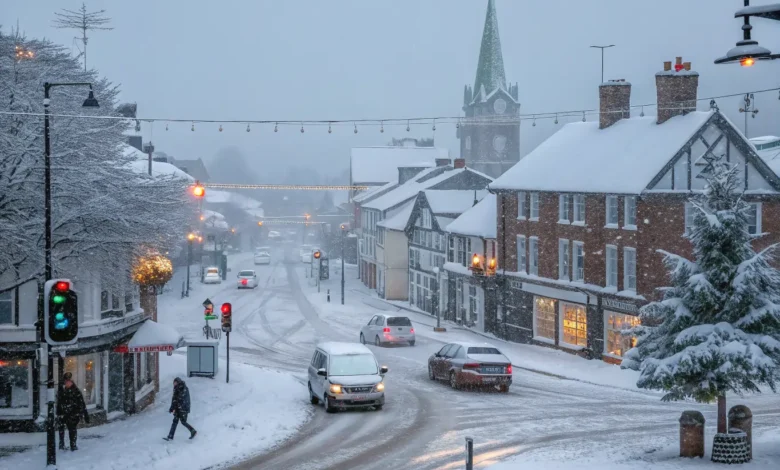
The UK braced for significant snowstorm bringing potential white Christmas as meteorologists warn of a colder and more unsettled festive period. Weather models suggest a shift in atmospheric pressure that could allow freezing air to dominate across much of the UK during Christmas. This has captured widespread attention because snowfall on Christmas Day remains rare across England, Wales, and even parts of Scotland. While forecasts are not yet fully certain, multiple weather models now point toward a higher likelihood of snow, prompting authorities and the public to stay vigilant. The emerging scenario highlights the need for preparation and awareness as winter conditions approach.
What Is UK Braced for Significant Snowstorm Bringing Potential White Christmas?
The phrase UK braced for significant snowstorm bringing potential white Christmas refers to a weather forecast in which conditions are increasingly favorable for snowfall during the Christmas period. It does not guarantee heavy or widespread snow, but it indicates an elevated probability compared to typical winter conditions. Meteorologists use this term when multiple forecast models show cold air moving into position and interacting with precipitation, which could lead to snow accumulation in certain areas. The phrase is also intended to emphasize preparedness rather than certainty, signaling that winter conditions could develop quickly as Christmas approaches. The use of this terminology reflects both caution and early alertness to a potential festive weather event.
Why Weather Models Are Indicating Snowfall
The UK braced for significant snowstorm bringing potential white Christmas is linked to shifts in large-scale pressure systems across the North Atlantic and northern Europe. Forecast models suggest that high pressure could form to the north of the UK, restricting the flow of milder Atlantic air. This allows colder Arctic or continental air to move southward and meet incoming moisture, increasing the likelihood that precipitation falls as snow. Even small variations in temperature, wind direction, or timing can significantly alter whether snow occurs. Meteorologists monitor these patterns closely to provide accurate forecasts and advise the public accordingly.
The Role of Atmospheric Blocking
Atmospheric blocking is a key factor in winter weather across the UK. Blocking occurs when high-pressure systems remain stationary for extended periods, preventing normal weather patterns from moving across the country. During winter, blocking to the north or northeast often leads to prolonged cold spells that support frost, ice, and snowfall. These conditions increase the potential for a white Christmas in northern and elevated regions. Forecasters consider blocking events a strong indicator for wintry conditions, helping to shape both national and regional predictions.
Regional Snowfall Variations
Although the UK braced for significant snowstorm bringing potential white Christmas is a nationwide concern, snowfall rarely occurs uniformly. Northern areas, including parts of Scotland and northern England, tend to experience colder temperatures that favor snow formation and accumulation. Southern regions often sit on the borderline between rain and snow, creating more uncertainty in local forecasts. Coastal areas are typically slightly warmer due to the moderating influence of surrounding seas, which may limit snow accumulation. Understanding these regional variations is crucial for planning, travel, and safety measures during potential winter conditions.
How Geography and Elevation Influence Snowfall
Geography and elevation play a crucial role in determining where snow is likely to fall. Higher elevations cool more rapidly and retain cold air longer than low-lying areas, making snow more probable. Northern latitudes receive less sunlight in winter, further lowering temperatures and creating more favorable conditions for snow to settle. Historical winter events consistently demonstrate that northern and elevated regions experience snowfall earlier and more reliably than southern lowlands. Geography is therefore a significant factor in understanding why snow may only appear in certain parts of the UK even during a national cold spell.
What a White Christmas Means in the UK
A white Christmas in the UK has a specific definition that often differs from public perception. Officially, a white Christmas occurs if at least one snowflake is observed anywhere in the UK on Christmas Day. This means the UK braced for significant snowstorm bringing potential white Christmas does not require widespread snow cover or deep accumulation. Even brief or localized snowfall qualifies under the official definition. While popular images of a white Christmas often show streets and landscapes fully covered in snow, the technical criteria are far more flexible.
How Rare White Christmases Really Are
White Christmases are relatively rare across England and Wales, while Scotland experiences them more frequently due to colder average winter temperatures. Most events in recent decades have been localized rather than nationwide. Long-term climate variability and warming trends have also influenced the frequency and distribution of snow during the festive period. This rarity explains why forecasts suggesting a potential white Christmas generate strong public interest and widespread discussion in the media.
Impact on Travel and Infrastructure
When the UK braced for significant snowstorm bringing potential white Christmas, transport networks and infrastructure services must prepare for possible disruption. Snow and ice can affect road conditions, rail services, and airport operations, particularly during the busy holiday travel period. Even small amounts of snow can result in delays if temperatures drop rapidly and surfaces become icy. Utility providers also monitor networks closely during cold spells to ensure essential services continue uninterrupted. Early awareness and preparation are critical to minimizing disruption and maintaining safety during winter weather events.
Why Light Snow Can Cause Major Disruption
The UK’s transport infrastructure is designed to manage typical winter conditions rather than prolonged or heavy snowfall. Sudden temperature drops can quickly turn wet surfaces into ice, creating higher accident risks. Increased traffic during the festive period places additional pressure on road and rail systems. These combined factors mean that even minor snowfall can lead to significant delays and disruption. This is why authorities urge caution and the public to remain prepared whenever snowfall is forecast during the Christmas period.
How Forecast Confidence Improves Closer to Christmas
Long-range weather forecasts identify trends rather than precise outcomes, and the UK braced for significant snowstorm bringing potential white Christmas reflects an increased probability rather than a confirmed event. Forecast accuracy improves as Christmas approaches and weather models converge on similar predictions. Small temperature differences can determine whether precipitation falls as snow or rain. Continuous updates from trusted sources allow individuals and communities to respond effectively to changing weather conditions, ensuring both safety and preparedness during the festive season.
Key Meteorological Indicators
Meteorologists monitor surface temperatures, upper-atmospheric conditions, wind direction, and the timing of precipitation. Snow is more likely to settle overnight or during early morning hours when temperatures are lowest. Clear skies prior to snowfall allow ground temperatures to drop further, while light winds help preserve cold air near the surface. These conditions collectively influence whether snowfall occurs and whether it accumulates long enough to create a white Christmas.
Preparing for a Cold Festive Period
Preparation is essential even when uncertainty remains. Staying updated through reliable forecasts allows individuals to plan travel, celebrations, and daily activities safely. Basic winter readiness, such as ensuring adequate clothing, monitoring road conditions, and adjusting travel plans, can significantly reduce risks associated with cold and snowy weather. Communities also benefit when residents remain alert to changing conditions, helping maintain safety and continuity of essential services. Preparation is about awareness, not alarm, and ensures that the festive period remains safe and enjoyable regardless of weather conditions.
(FQRS)
1. What does “UK braced for significant snowstorm bringing potential white Christmas” mean?
It signals a higher chance of snow around Christmas in the UK, alerting the public to prepare for cold and wintry conditions.
2. How likely is a white Christmas this year?
A white Christmas isn’t guaranteed, but northern and elevated regions have a better chance of snowfall than southern or coastal areas.
3. Which areas are most at risk of snow?
Northern England, Scotland, and higher elevations are more likely to see snow, while southern and coastal regions may remain milder.
4. How rare are white Christmases?
They are uncommon in England and Wales, more frequent in Scotland, and often localized rather than nationwide.
5. How could snow affect travel and infrastructure?
Snow and ice can disrupt roads, rail, and airports, especially during peak holiday travel, even if snowfall is light.
6. What factors determine if snow falls?
Temperature, wind direction, precipitation timing, and clear skies all influence whether snow settles or remains rain.
7. How should people prepare?
Stay updated with forecasts, plan travel carefully, wear appropriate clothing, and take precautions for cold and icy conditions.
Conclusion
The UK braced for significant snowstorm bringing potential white Christmas highlights a developing trend toward colder winter conditions across the country. While widespread snowfall is not guaranteed, atmospheric signals suggest an increased risk of localized snow events. Regional differences, timing, and geography will determine where snow accumulates and whether a white Christmas occurs. Monitoring trusted weather forecasts is essential for both safety and planning. With awareness and preparation, the festive period can remain safe, enjoyable, and well-managed, regardless of the weather.

