Word puzzle games have always been a popular means for testing one’s mental abilities. Wordle – The New York Times has revolutionized such word games by creating a fun activity for millions of users all over the globe. This is a simple but very entertaining word game that requires participants to guess a secret word consisting of five letters within just six guesses. The reason why Wordle is so popular is its easy-to-use interface and rules, as well as a common puzzle everyone needs to solve each day.
What is Wordle – The New York Times?
The question what is Wordle – The New York Times? is commonly asked by new users who discover the game for the first time. It is a daily word guessing puzzle where players must identify a hidden five-letter word within six attempts. Each guess provides feedback that helps the player move closer to the correct answer. The game is not based on speed or luck but on logic, vocabulary knowledge, and pattern recognition skills.
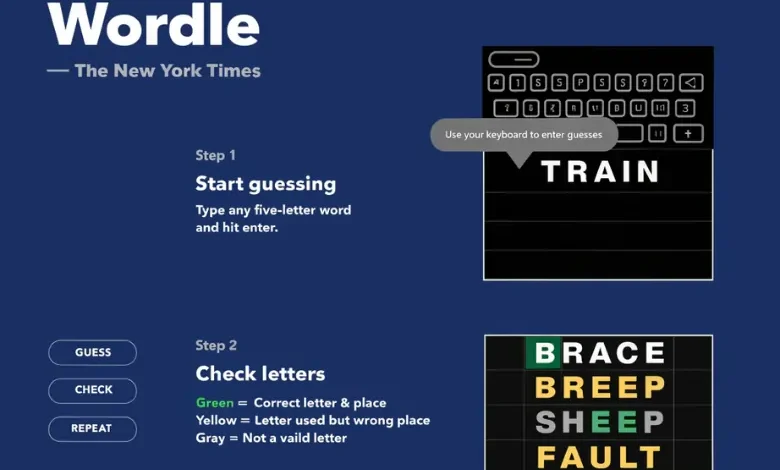
Each attempt in the game is meaningful because it gives clues about which letters are correct and where they belong. The feedback system is designed to guide players step by step toward the solution. A green tile shows that the letter is correct and in the correct position, a yellow tile means the letter is correct but placed incorrectly, and a gray tile indicates the letter is not part of the word at all. This system encourages critical thinking and makes every guess a strategic decision rather than a random attempt.
How the Game Works in Detail
The structure of Wordle – The New York Times is simple but highly engaging. Players start by entering any valid five-letter word. After submitting the word, the system provides color-coded feedback that helps guide the next move. There is no time limit, allowing players to think carefully and analyze each clue before proceeding further.
Each guess plays an important role in narrowing down possible answers. Instead of rushing, players are encouraged to use logic to eliminate incorrect letters and identify patterns. As the number of attempts decreases, the challenge becomes more intense, requiring better focus and decision-making. This gradual difficulty progression keeps the game engaging from start to finish.
History and Evolution of Wordle
The origin of Wordle – The New York Times is rooted in a simple personal project created by software engineer Josh Wardle. Initially, it was designed as a gift for his partner who enjoyed word games. However, after being shared publicly, it quickly gained attention and spread across social media platforms. Its simple design and daily challenge format made it stand out from other online games.
As the game’s popularity grew rapidly, millions of users began playing it daily. In 2022, The New York Times Company acquired the game, adding it to its growing collection of digital puzzles. Despite this change in ownership, the original gameplay remained unchanged. This decision helped preserve the core experience that made the game so popular in the first place.
Strategies for Improving Performance
Success in Wordle – The New York Times depends largely on strategy and logical thinking rather than luck. Players who consistently perform well often use structured approaches to maximize the information gained from each guess. One effective method is to start with words that contain common vowels and frequently used consonants. This helps identify key letters early in the game and builds a strong foundation for future guesses.
Another important strategy is to focus on eliminating incorrect letters as quickly as possible. This reduces the number of possibilities and makes it easier to identify the correct word. Paying attention to letter placement is also crucial because positional clues often provide stronger hints than individual letters alone. Over time, these techniques help players develop better accuracy and faster solving abilities.
Why the Game Became So Popular Worldwide
The global success of Wordle – The New York Times can be attributed to several key factors. One of the main reasons is its simplicity. The game does not require downloads, payments, or technical knowledge, making it accessible to a very wide audience. Anyone can start playing instantly, regardless of age or experience.
Social sharing has also played a major role in its popularity. Players can share their results in a way that shows progress without revealing the answer. This encourages friendly competition and discussion among friends and online communities. The combination of mental challenge and social interaction has helped the game spread rapidly across the internet.
Educational and Cognitive Benefits
Beyond entertainment, Wordle – The New York Times also offers strong educational value. It helps improve vocabulary, spelling accuracy, and language comprehension skills. Regular players often notice improvements in their ability to recognize word patterns and understand letter combinations more effectively.
The game also enhances logical thinking and problem-solving abilities. Since each guess requires careful analysis of feedback, it trains the brain to think critically and make informed decisions. This type of mental exercise can improve concentration and attention span over time.
Role of The New York Times Platform
After being acquired, Wordle – The New York Times became part of a larger digital puzzle ecosystem. The platform ensured better stability, improved word selection, and long-term maintenance while keeping the original gameplay intact. This allowed the game to maintain its identity while benefiting from professional support and infrastructure.
The integration into a larger puzzle collection also helped introduce the game to new audiences who regularly engage with other NYT games. Despite these changes, the core mechanics remained the same, which is a major reason why existing players continued to enjoy it without disruption.
Interesting Facts About the Game
The game attracts millions of daily players worldwide and continues to be a part of everyday digital routines for many users. It became viral within a short period of time and continues to trend on social media platforms even today. Many similar word-based games have been inspired by its success, but few have achieved the same level of global engagement.
Its simple structure, combined with its intellectual challenge, has made it one of the most influential online puzzle games in recent years. It demonstrates how minimal design and strong concept execution can lead to massive success.
(FAQs)
1. What is Wordle – The New York Times?
Wordle – The New York Times is a daily word puzzle game where players guess a hidden five-letter word in six attempts using color-coded feedback clues.
2. How do you play Wordle?
Players enter a five-letter word, and the game shows green, yellow, or gray tiles to indicate correct letters, wrong positions, or incorrect letters.
3. How many attempts are allowed in Wordle?
Each player gets six attempts to correctly guess the hidden five-letter word of the day.
4. Is Wordle free to play?
Yes, Wordle is free to play and can be accessed through The New York Times Games platform without any subscription.
5. Why did The New York Times buy Wordle?
The New York Times acquired Wordle to expand its digital games portfolio and strengthen its puzzle offerings for global audiences.
6. Can I play old Wordle puzzles?
No, Wordle offers only one new puzzle per day, and previous puzzles are not officially available to play again.
7. What skills does Wordle improve?
Wordle helps improve vocabulary, spelling, logical thinking, pattern recognition, and overall problem-solving abilities.
Conclusion
In summary, Wordle – The New York Times is one of the most famous word puzzles because of its simplicity and accessibility through a daily challenge. It is an excellent way for users to exercise their minds while having fun since the game allows them to develop their vocabularies and learn how to spell better. Additionally, it helps users engage in logical reasoning. The fact that everyone plays the same word in the world every day makes people feel connected and forms a unique community among millions of individuals. After the acquisition by The New York Times, the game has retained its popularity.