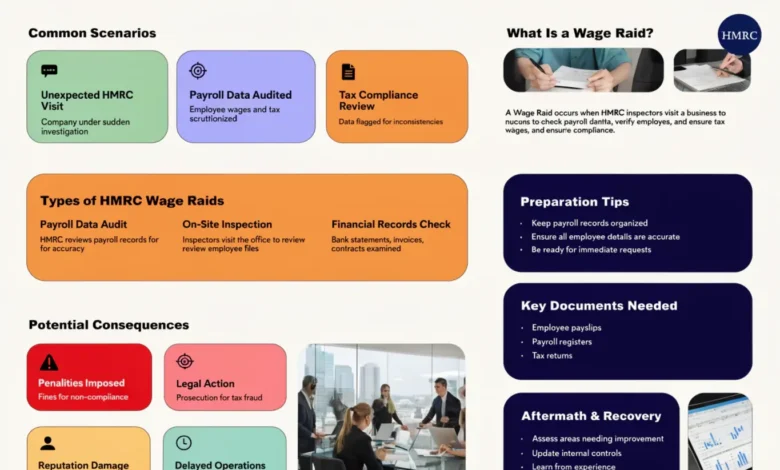
Compliance with payroll and tax laws is essential for all UK businesses. HM Revenue & Customs conducts rigorous audits to ensure that employers are paying employees correctly, deducting taxes, and maintaining accurate records. One of the most serious inspections a business can face is an HMRC wage raid payroll checks audit, often carried out without prior notice. These audits are designed to detect discrepancies in employee pay, incorrect National Insurance contributions, and other payroll irregularities. Non-compliance can lead to fines, repayment of unpaid taxes, interest charges, and in extreme cases, criminal prosecution. Understanding these audits and preparing proactively is essential for protecting your business and maintaining operational stability.
What are HMRC Wage Raid Payroll Checks?
An HMRC wage raid payroll checks audit is a targeted investigation into a company’s payroll management practices. HMRC officers will review employee contracts, payslips, payroll records, and other documentation to ensure compliance with employment law, tax regulations, and National Insurance contributions. These audits are conducted to uncover issues such as misclassification of employees, underpayment of wages, unreported cash payments, or incorrect tax deductions. Companies that maintain accurate payroll records, clearly define employee roles, and utilize reliable payroll software are more likely to pass inspections without penalties. These audits can cover multiple years of payroll history, particularly if HMRC suspects significant irregularities or deliberate non-compliance.
Why These Audits Are Conducted
Payroll audits are conducted to protect both employees and the tax system. HMRC focuses on businesses with irregular payroll reporting, frequent cash payments, or reliance on temporary and casual staff. Complaints from employees regarding unpaid wages or unauthorized deductions can also trigger inspections. The main objective of these audits is to ensure that employers comply with all legal requirements, including correct wage payments, tax withholding, and National Insurance contributions. Businesses that maintain transparent payroll processes, keep accurate documentation, and proactively address compliance issues are better equipped to handle inspections and minimize financial risks.
How HMRC Conducts Payroll Audits
HMRC wage raid payroll checks typically begin with an unannounced visit to the business premises. Officers request access to payroll records, employee contracts, payslips, and financial documents. They review this information in detail to verify that taxes and National Insurance contributions have been correctly calculated and reported. Payroll or HR staff may be interviewed to confirm employee classifications, payroll procedures, and internal controls. HMRC then cross-checks the payroll data against its internal records to identify any discrepancies, such as underreported wages, missing documentation, or misclassified employees. Depending on the findings, audits may conclude with confirmation of compliance, repayment of unpaid taxes, financial penalties, or in extreme cases, legal action.
Typical Audit Procedures
During the audit, HMRC examines multiple years of payroll data, employee classification records, and documentation of bonuses or overtime. They assess the accuracy of the payroll system and internal controls designed to prevent errors. Businesses with organized, digital records and thorough compliance procedures can demonstrate their adherence to regulations efficiently. Ensuring transparency in all payroll processes significantly reduces the risk of penalties and helps businesses handle audits with confidence.
Common Payroll Issues Identified by HMRC
Businesses often face challenges during HMRC wage raid payroll checks due to payroll errors, misclassified staff, or incomplete documentation. Frequent issues include employees being wrongly classified as self-employed to reduce tax liability, underpayment of wages, unreported cash payments, and incomplete recordkeeping of payroll adjustments. Missing employee contracts and inaccurate documentation make audits more difficult and often result in additional scrutiny. Companies that maintain detailed payroll procedures, use reliable payroll software, and perform regular internal reviews are better equipped to manage audits and minimize financial or legal penalties.
Risks of Non-Compliance
Failing to comply with payroll regulations can result in significant consequences. Businesses may face repayment of unpaid taxes and National Insurance contributions, hefty fines, and reputational damage. Employees may lose trust in the company, and the business could be subject to increased scrutiny from other regulatory authorities. Non-compliance may also lead to repeat audits, causing ongoing operational disruption. Maintaining transparency, accurate records, and adherence to payroll laws is critical to mitigate these risks and protect the long-term stability of the business.
Preparing for Payroll Audits and Minimizing Risks
Preparation is the most effective way to reduce the risks associated with payroll inspections. Companies should regularly review payroll records to ensure all employee classifications, tax deductions, and National Insurance contributions are accurate and compliant with regulations. Employee contracts must be current and clearly define roles, responsibilities, and pay terms. Implementing reputable payroll software helps reduce errors, ensures accurate calculations, and produces audit-ready reports. Staff responsible for payroll should be trained on HMRC rules and ready to respond to inquiries during audits. Maintaining organized, secure digital archives of payroll records over multiple years ensures that audits can be handled efficiently. Proactive compliance is the key to avoiding fines, interest charges, and operational disruption.
Best Practices for Compliance
Businesses can further reduce audit risks by consistently monitoring payroll accuracy, documenting all payments and adjustments, and maintaining updated employee classifications. Providing regular training for payroll staff and staying informed of regulatory updates ensures ongoing compliance. Companies that integrate these practices demonstrate good faith during audits and protect themselves from financial and legal consequences.
Consequences of Non-Compliance
Failing an HMRC payroll audit can result in serious financial and legal outcomes. Businesses may be required to repay unpaid taxes and National Insurance contributions along with accrued interest. Penalties can be severe, especially if HMRC determines that discrepancies were deliberate or repeated. In extreme cases, criminal proceedings may be brought against business owners or payroll managers responsible for non-compliance. Beyond monetary consequences, businesses risk reputational damage, affecting relationships with employees, clients, and suppliers. Ensuring accurate payroll records, regularly reviewing compliance procedures, and maintaining transparent documentation is the best strategy for mitigating these risks.
Long-Term Implications
Ongoing non-compliance can lead to repeated audits, employee disputes, and increased regulatory scrutiny. Companies with robust payroll procedures, complete documentation, and a proactive compliance culture are far less likely to face repeated penalties. Protecting the business from long-term implications requires diligence, transparency, and continuous monitoring of payroll systems.
Frequently Asked Questions
1. What triggers an HMRC wage raid payroll check?
Inspections are often triggered by irregular payroll reporting, employee complaints, frequent cash payments, or discrepancies in submitted tax returns.
2. Can HMRC conduct payroll audits without prior notice?
Yes, HMRC can perform surprise audits to ensure businesses comply with tax and employment regulations.
3. How long do these payroll audits usually take?
The duration depends on business size; smaller companies may take a few days, while larger organizations can take several weeks.
4. What are the common penalties for non-compliance?
Penalties can include repayment of unpaid taxes, fines up to 100% of the owed amount, interest charges, and in severe cases, legal action.
5. Do HMRC audits focus only on cash wages?
No, audits review all forms of employee compensation, including salaries, bonuses, and overtime payments.
6. How can businesses prepare for payroll audits?
Regular internal audits, accurate employee classification, updated contracts, and reliable payroll software are essential for readiness.
7. What are the long-term consequences of non-compliance?
Businesses may face repeated audits, employee disputes, reputational damage, and ongoing regulatory scrutiny if compliance issues persist.
Conclusion
HMRC wage raid payroll checks are a serious compliance measure that every UK business must be prepared for. These audits ensure that employers are accurately paying employees, correctly deducting taxes, and maintaining proper payroll records. Failing to comply can result in significant financial penalties, interest charges, and even legal consequences, making proactive preparation essential. Businesses that regularly review payroll processes, maintain accurate records, implement reliable payroll software, and ensure proper employee classification are far better equipped to handle inspections. Understanding the audit process, staying informed about regulatory requirements, and fostering a culture of compliance not only reduces risk but also strengthens trust with employees and protects the business’s reputation. By taking these steps, companies can navigate HMRC wage raid payroll confidently and maintain smooth, lawful operations.